
Physical Properties of Pressureless Sintered Silicon Carbide Ceramic Products

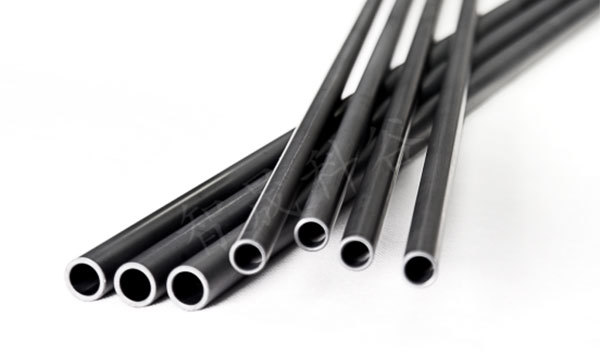
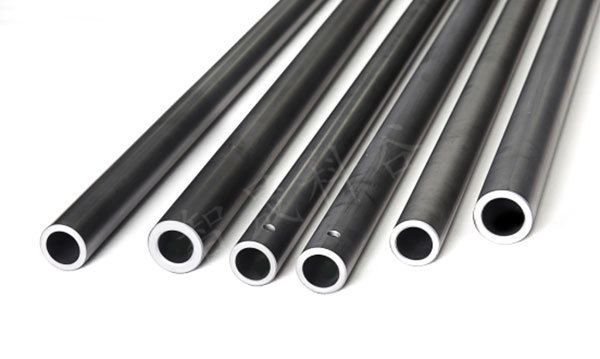
The thermal conductivity of silicon carbide is almost comparable to that of commonly used graphite tubes and is far higher than that of other materials. Its thermal conductivity is twice that of tantalum, five times that of stainless steel, ten times that of Teflon (polytetrafluoroethylene), 15 times that of enamel, and 50 times that of polytetrafluoroethylene. This excellent thermal conductivity allows SiC heat exchangers to achieve higher heat transfer efficiency with a significantly smaller heat transfer area.
Due to its excellent thermal conductivity and superior mechanical properties, pressureless sintered silicon carbide is a preferred material for heat exchanger tubes. Its relative density reaches over 98%, and it is a sealed body without any impregnant. Its hardness is 50% higher than that of tungsten carbide (hard alloy), thus exhibiting superior wear resistance and complete impermeability even under extreme temperatures and pressures, allowing media to pass through at high speeds. The high hardness and high density of silicon carbide also mean that it will not contaminate the medium in high-purity applications.
Physical Properties | UNIT | Pressureless Sintered Silicon Carbide | |
Composition: SiC | vol% | ≥98 | |
Density 20°℃ | g/cm³ | ≥3.10 | |
Open Porosity | Vol% | <3.0 | |
Hardness | Rockwell Hardness 45N | R45N | 93 |
Vickers Hardness HVI | kg/mm² | 2350 | |
Flexural Strength 20℃ | MPa | 320–400 | |
Flexural Strength1300℃ | MPa | 300–400 | |
Cofficient of Themal Expansion | 10⁻⁶K⁻¹ | 4 | |
Themal Conductivity 20℃ | Wm⁻¹K⁻¹ | 116 | |
Thermal Conducivity 1200℃ | Wm⁻¹K⁻¹ | 35 | |
Modulus of Elasticity @ RT | GPa | 410 | |
Thermal shock resistance | ℃ | >350 | |
Mar. Service Temp (air) | ℃ | approx.1650 | |
Heat exchange tube
The thermal conductivity of silicon carbide is almost comparable to that of commonly
Keywords:
Category:
Online Consultation
Note: Please leave your contact information, our professionals will contact you as soon as possible!
Recommended Products
Contact Information
Telephone: +8617349222520
Telephone: +8613813810619
Email: sales@kegugroup.com
Address: Chaoyang 5th Road South Section, Weicheng Street, Qinhan New City, Xixian New District, Shaanxi Province
Official Account
Douyin
Mobile Site