
Physical Properties of Pressureless Sintered Silicon Carbide Ceramic Products

In the metal materials sintering, melting, heat treatment, and glass industries, indirect gas heating is an important method. Compared with direct combustion heating, indirect gas heating can significantly improve thermal efficiency and reduce the emission of harmful gases such as NOx. At the same time, it improves temperature stability and ensures control of the furnace atmosphere; in many industrial heating processes, it is required that the workpiece be isolated from the combustion environment. This requires the use of indirect radiant heating.
Traditional indirect heating mainly uses metals or their alloys as the radiant heating tubes of the heating system, but so far, the upper limit of the operating temperature of most metal radiant tubes is only 1000℃, which cannot meet the higher heating temperature requirements of many processes. The main problem currently existing is the reliability of long-term use at higher temperatures and in more complex media. Pressureless sintered SiC radiant tubes can be used stably for a long time at high temperatures of 1650℃ and in various corrosive media.
Physical Properties | UNIT | Pressureless Sintered Silicon Carbide | |
Composition: SiC | vol% | ≥98 | |
Density 20°℃ | g/cm³ | ≥3.10 | |
Open Porosity | Vol% | <3.0 | |
Hardness | Rockwell Hardness 45N | R45N | 93 |
Vickers Hardness HVI | kg/mm² | 2350 | |
Flexural Strength 20℃ | MPa | 320–400 | |
Flexural Strength1300℃ | MPa | 300–400 | |
Cofficient of Themal Expansion | 10⁻⁶K⁻¹ | 4 | |
Themal Conductivity 20℃ | Wm⁻¹K⁻¹ | 116 | |
Thermal Conducivity 1200℃ | Wm⁻¹K⁻¹ | 35 | |
Modulus of Elasticity @ RT | GPa | 410 | |
Thermal shock resistance | ℃ | >350 | |
Mar. Service Temp (air) | ℃ | approx.1650 | |
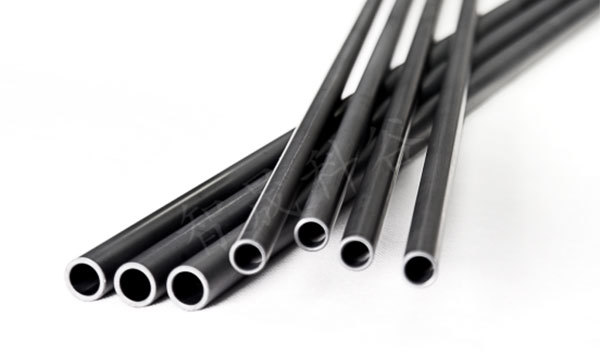
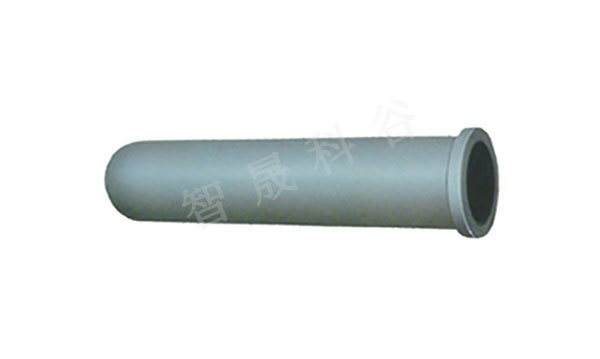
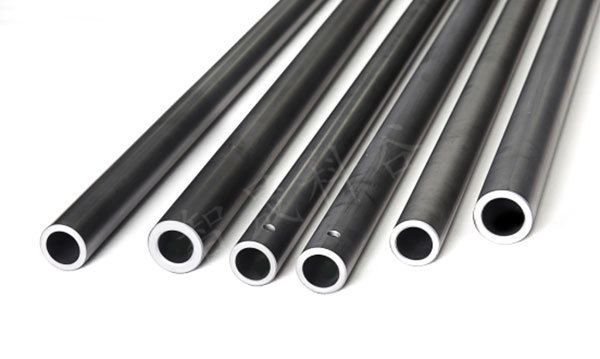
Thermal radiation heating tube
In the metal materials sintering, melting, heat treatment, and glass industries
Keywords:
Category:
Online Consultation
Note: Please leave your contact information, our professionals will contact you as soon as possible!
Recommended Products
Contact Information
Telephone: +8617349222520
Telephone: +8613813810619
Email: sales@kegugroup.com
Address: Chaoyang 5th Road South Section, Weicheng Street, Qinhan New City, Xixian New District, Shaanxi Province
Official Account
Douyin
Mobile Site