
What are the characteristics and heat dissipation principles of stainless steel heat exchange tubes?
这里是标题一h1占位文字
Publication Time:
2024-09-04
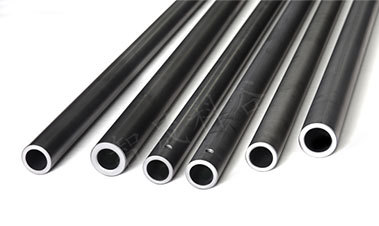
With the continuous advancement of industrial technology, auxiliary equipment for industrial production has also been widely developed, and the use of stainless steel heat exchange tubes is increasing. So, what are the characteristics of stainless steel heat exchange tubes?
With the continuous advancement of industrial technology, auxiliary equipment for industrial production has also been widely developed, and the use of stainless steel heat exchangers is increasing. So, what are the characteristics of stainless steel heat exchangers? Common stainless steel heat exchangers in life, of course, also have many questions about stainless steel heat exchangers. This article will explain the knowledge about stainless steel heat exchangers to answer your questions.
Product Features:
1. Small size, high power: The electric heater mainly uses a bundled tubular heating element, and each bundled tubular electric heating element has a maximum power of 5000 KW.
2. Fast thermal response, high temperature control accuracy, and high overall thermal efficiency.
3. Wide range of applications and strong adaptability: This circulating heater can be used in explosion-proof or ordinary occasions, it can achieve explosion-proof, and its pressure resistance can reach 20 MPa. And the cylinder can be installed vertically or horizontally according to user needs.
4. High heating temperature: The heater is designed with a high operating temperature of up to 850℃, which is generally unattainable by ordinary heat exchangers.
The essence of heat dissipation of stainless steel heat exchangers is heat transfer, and heat transfer is divided into three types: conduction, convection, and radiation.
1. Conduction is a way of transferring energy through direct contact and collision between particles with lower energy and particles with higher energy. The heat transfer between the air conditioning refrigerant and the heat dissipation fins mainly uses this method, which is also a common heat transfer method.
2. Convection refers to the process where the hotter and colder parts of a gas or liquid circulate to make the temperature uniform. The fan in the air conditioning condenser drives the flow of gas, which also belongs to the "forced convection" heat dissipation method.
3. Radiation, as the name suggests, is the process of directly radiating heat energy from the heat source outwards. This process is related to the color, material, and temperature of the heat source surface. The speed of radiation is relatively slow, so its role in radiator heat dissipation is very limited (radiation can occur in a vacuum). These three heat dissipation methods are not isolated; in daily heat transfer, these three heat dissipation methods occur simultaneously and work together.
Keywords:
Power,Heater
Related News
Contact Information
Telephone: +8617349222520
Telephone: +8613813810619
Email: sales@kegugroup.com
Address: Chaoyang 5th Road South Section, Weicheng Street, Qinhan New City, Xixian New District, Shaanxi Province

Official Account
Douyin
Mobile Site